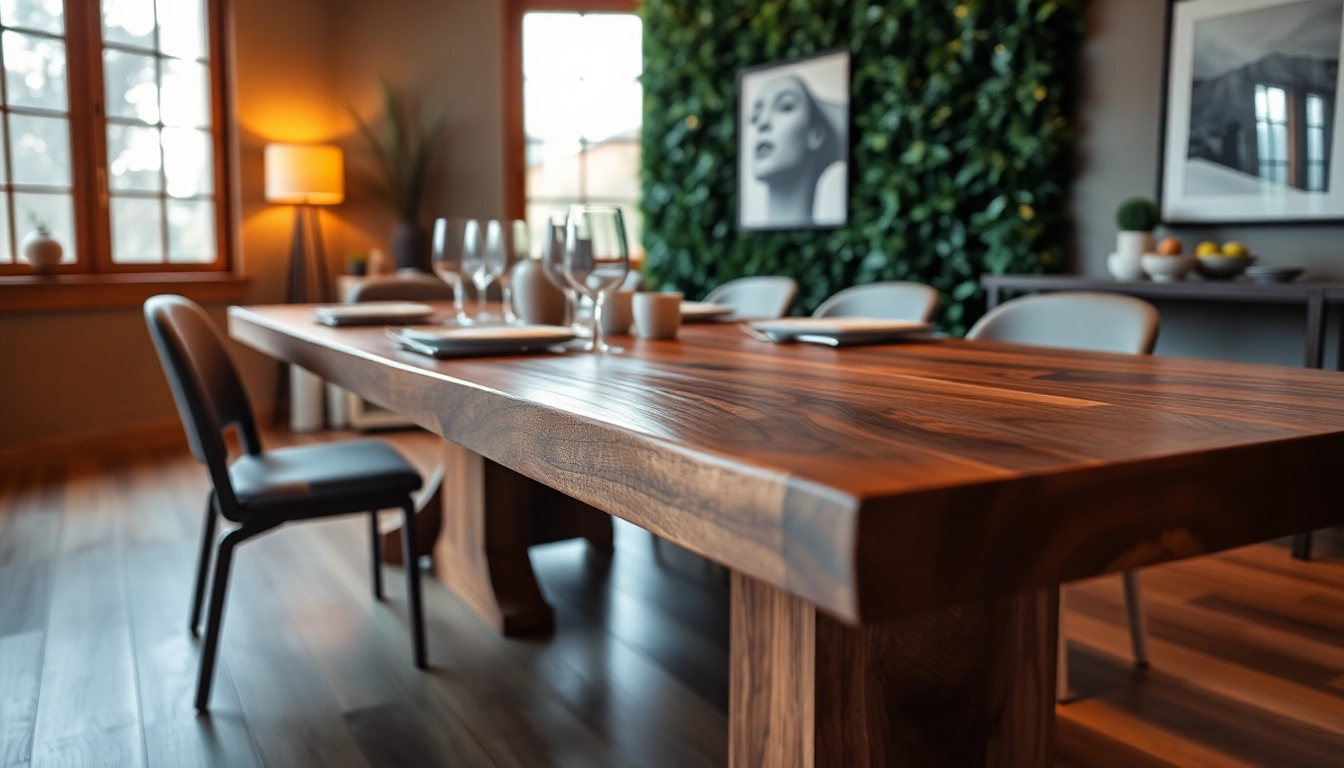
Understanding the Custom Dining Table
What is a Custom Dining Table?
A Custom dining table is a uniquely crafted piece of furniture that is tailored specifically to the requirements and tastes of the individual buyer. Unlike mass-produced tables found in furniture stores, a custom dining table is an embodiment of personalized design and craftsmanship, often made from high-quality materials. This allows for a variety of options including size, shape, style, and finishing elements. Custom dining tables are designed to not only complement the aesthetics of a dining room but also to cater to the specific dimensions and functionalities required by the buyer's space.
Benefits of Opting for a Custom Dining Table
Choosing a custom dining table comes with multiple advantages that enhance not just the look of your dining space, but also how it functions.
- Personalization: You can choose every detail, from size to wood finish, ensuring the table fits your unique style.
- Quality Craftsmanship: Custom tables are often handcrafted, utilizing better materials, ensuring longevity and durability.
- Optimal Fit: Custom tables can be made to fit specific dimensions of your dining area, maximizing the available space.
- Exclusive Design: Owning a one-of-a-kind piece can enhance the character of your home and make it feel more inviting.
Materials Used in Custom Dining Tables
The choice of materials is crucial in defining the aesthetics and functionality of a custom dining table. Common materials include:
- Solid Wood: Oak, cherry, walnut, and maple are popular choices, known for their beauty and durability.
- Reclaimed Wood: Offers a unique character and eco-friendliness, allowing you to bring history into your home.
- Metal: For industrial or modern aesthetics, metals can be used for bases and accents.
- Glass: Frequently used as a tabletop surface, glass adds a touch of elegance and can create an illusion of space.
Designing Your Ideal Custom Dining Table
Choosing Size and Shape for Your Space
When designing a custom dining table, the first step is deciding on the ideal size and shape. Consider the following:
- Room Dimensions: Measure your dining area to understand the space available. A table that is too large can overwhelm a room, while one that is too small can make it feel empty.
- Seating Capacity: Determine how many people you intend to seat regularly. Rectangular tables are suitable for larger gatherings, while round tables promote intimacy.
- Traffic Flow: Ensure there is enough space around the table for chairs to be pulled out and movement to occur without obstruction.
Selecting Wood Type and Finish
Choosing the right wood type is essential for both aesthetics and durability. Here’s what to consider:
- Wood Grain: Different wood species have unique grains that affect the overall look of the table. Oak and ash have prominent grains, while maple offers a smoother finish.
- Stain & Finish: Selecting a stain can enhance the natural beauty of the wood or achieve a desired color. Protective finishes also determine how the wood will age and resist wear.
Incorporating Unique Design Elements
Your custom dining table can feature a variety of design elements that transform a standard table into a conversation starter:
- Leg Styles: Choose from tapered, pedestal, or slab legs to influence the overall design aesthetic.
- Edging Profiles: Adding a decorative edge can enhance the table's uniqueness and style.
- Inlays and Accents: Custom designs could include decorative inlays made from contrasting woods or materials such as metal or glass.
Functionality and Layout Considerations
Thinking About Seating Arrangements
It’s vital to account for seating arrangements when designing a Custom dining table. Consider these points:
- Type of Chairs: The height and style of chairs impact comfort and usability. Ensure the chairs fit nicely under the table.
- Clearance: Aim for at least 36 inches between the edge of the table and any obstructions for comfortable access.
- Flexible Options: A table with extensions might be beneficial for hosting guests during gatherings.
Designing for Multiple Uses
Many families use their dining tables for various purposes beyond dining, such as working or crafting. Consider the following:
- Durability and Finish: Opt for finishes that resist scratches and stains if the table is used for diverse activities.
- Adjustable Features: Consider features such as slide-out extensions for extra space when needed.
- Storage Options: Tables with built-in storage for placemats or utensils can keep your dining space organized.
Balance Between Aesthetics and Practicality
Striking the right balance between design and functionality will ensure your Custom dining table is both beautiful and practical. Here are some strategies:
- Material Selection: Choose materials that provide beauty without compromising on durability.
- Aesthetic Cohesion: Ensure the design of the table aligns with the overall style of your home.
- Functional Enhancements: Consider elements like adjustable height mechanisms for versatility.
Cost Factors for Custom Dining Tables
Understanding Pricing Components
Several factors influence the cost of a custom dining table, including:
- Material Costs: Solid wood tables generally cost more than those made with engineered wood or composite materials.
- Design Complexity: Intricate designs with custom features typically increase the cost.
- Labor Charges: Skilled craftsmanship commands higher prices, but it often results in superior quality.
Comparing Costs with Pre-made Options
It’s essential to compare the costs of custom tables against pre-made options:
- Value Consideration: While pre-made tables may offer lower initial costs, they often lack the personalization and quality of custom designs.
- Longevity of Investment: Custom tables tend to last longer and can retain their value better, making them a worthwhile investment.
- Customization Flexibility: Opting for a custom dining table means you gain a unique piece that might fulfill specific needs unlike any pre-made option.
Investing in Quality Craftsmanship
Quality craftsmanship is a crucial factor when investing in a custom dining table. Here are some aspects to consider:
- Skilled Artisans: Tables crafted by seasoned artisans often exhibit superior attention to detail and build quality.
- Handcrafted Techniques: Techniques like dovetail joints and mortise-and-tenon joinery increase strength and longevity.
- Warranty and Customer Service: High-quality custom tables typically come with warranties that reflect their craftsmanship.
Maintaining Your Custom Dining Table
Care Tips for Longevity
Ensuring your custom dining table remains beautiful and functional for years involves proper care. Here are some essential maintenance tips:
- Regular Cleaning: Use a soft, damp cloth for routine cleaning, avoiding harsh chemicals that could damage the finish.
- Avoid Direct Sunlight: Protect the table's finish from UV damage by keeping it away from direct sunlight.
- Use Coasters and Placemats: Prevent scratches and heat damage by placing coasters and protective mats under dishes and drinks.
Repairing and Refinishing Techniques
Even high-quality tables may require repairs or refinishing over time. Consider these techniques:
- Minor Scratches: Use a wood marker to touch up minor scratches, effectively blending them with the original finish.
- Refinishing: For tables with significant wear, a full refinishing can restore the original beauty; this involves sanding and applying new stain and finish.
- Professional Repairs: For major issues, involving a professional furniture restorer can ensure the table is repaired with expertise.
Creating a Maintenance Schedule
A well-planned maintenance schedule will help you keep your custom dining table in top condition:
- Daily Care: Wipe the table with a clean, soft cloth every day to remove dust and crumbs.
- Seasonal Maintenance: Every few months, check for scratches and apply polish or replenish the protective coating.
- Annual Inspection: Once a year, inspect structural integrity and seek professional help if any issues are found.