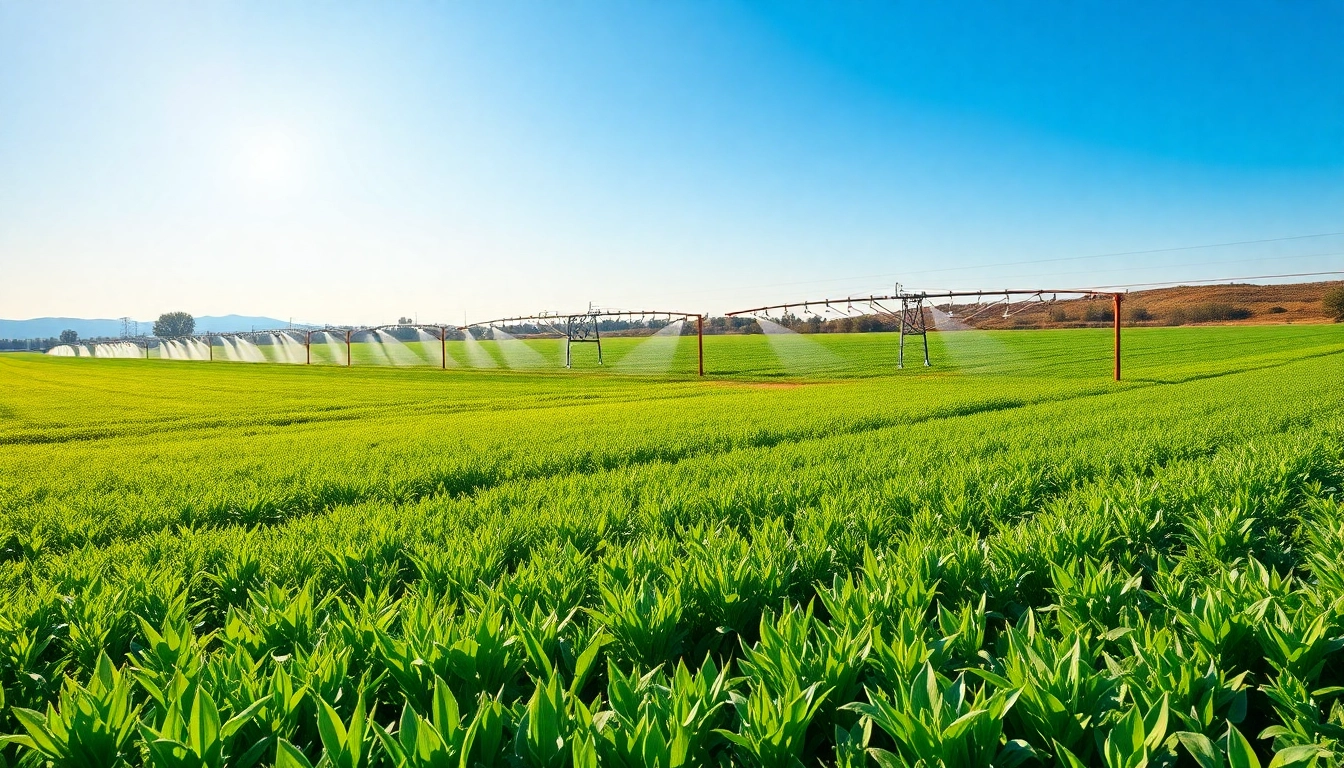
Understanding Land Irrigation
Definition and Importance of Land Irrigation
Land irrigation refers to the artificial application of water to soil or land to assist in the growth of crops. It plays a critical role in agriculture, especially in regions where rainfall is insufficient or irregular. By optimizing land irrigation, farmers can enhance crop yields, promote sustainable agricultural practices, and secure food supply, thereby ensuring better economic outcomes. The importance of land irrigation extends beyond the immediate agricultural benefits; it also contributes to improved soil health, reduces erosion, and can even support local ecosystems by maintaining the water table.
Historical Context and Evolution
The history of land irrigation dates back thousands of years, with ancient civilizations employing various techniques to harness water resources efficiently. The Sumerians and Egyptians developed complex systems using canals and reservoirs to divert river water for farming. These early innovations paved the way for the evolution of modern irrigation practices. Over time, advancements in technology and our understanding of hydrology have led to more precise and efficient methods, such as drip and sprinkler systems. Today, global challenges like climate change are prompting further innovations and adaptations in irrigation practices, emphasizing the ongoing importance of effective land irrigation.
Key Components of Land Irrigation Systems
A well-designed land irrigation system consists of several essential components, each crucial for ensuring efficient water delivery to crops. These components typically include:
- Water Source: This can be a river, lake, reservoir, or well, serving as the primary supply of water.
- Conveyance Systems: Channels, pipes, and ditches that transport water from the source to the fields.
- Distribution Networks: The method by which water is spread across the farmland, which may include gates, valves, and regulators.
- Irrigation Methods: Techniques such as surface, drip, or sprinkler irrigation that determine how water is applied to the crops.
- Control Mechanisms: Devices and technologies that help monitor and control water levels, ensuring optimal usage.
Types of Land Irrigation Methods
Surface Irrigation Techniques
Surface irrigation involves applying water directly to the soil surface, allowing it to flow over the fields. This method can be subdivided into various techniques such as furrow, basin, and border irrigation. Each technique has its own set of advantages and best-use scenarios:
- Furrow Irrigation: Water is applied in trenches or furrows between crop rows, minimizing water loss through evaporation and runoff.
- Basin Irrigation: Water is allowed to pool in basins surrounding plants, which promotes deep soaking and efficient water usage.
- Border Irrigation: Level strips of land receive water, helping to distribute moisture evenly across fields with few variations in elevation.
While surface irrigation can be cost-effective, it may also lead to water loss through evaporation and runoff. Thus, careful management is essential to optimize efficiency.
Drip Irrigation Advantages
Drip irrigation, often regarded as one of the most efficient water management systems, delivers water directly to the plant roots through a network of tubing and emitters. The key advantages of drip irrigation include:
- Water Efficiency: Drip systems reduce water usage by delivering targeted amounts directly to the crops, minimizing waste.
- Fewer Weeds: By applying water only where needed, drip irrigation can inhibit the growth of weeds that flourish in wetted areas.
- Reduced Soil Erosion: The minimal surface runoff helps maintain soil structure and organic matter integral to soil health.
Moreover, drip systems can be automated, allowing for precise control over watering schedules, which can be particularly beneficial during periods of drought or water scarcity.
Sprinkler Irrigation Systems Explained
Sprinkler irrigation mimics natural rainfall by distributing water through a system of pipes and spray nozzles. This method is flexible and can be used across various terrains. Sprinkler systems come in different configurations, including:
- Permanent Systems: Fixed installations designed to cover large areas efficiently.
- Portable Systems: Moved between fields or sections as needed, providing flexibility and adaptability.
- Center Pivot Systems: Automated and often used for large-scale, circular crop production.
Sprinkler irrigation is effective for a variety of crops and soil types, allowing for uniform coverage and minimizing water wastage when properly managed.
Challenges in Implementing Land Irrigation
Water Scarcity Issues
With the global population continuously increasing, the competition for water resources is growing. Water scarcity presents one of the most significant challenges for land irrigation. Areas where agriculture is dependent on a limited water supply face severe risks to crop production. Solutions such as rainwater harvesting, advanced irrigation techniques, and crop selection that requires less water can help mitigate this issue.
Soil Erosion and Management
The improper application of water can lead to soil erosion, which degrades land quality and diminishes fertility. Key practices to combat erosion include:
- Contour Plowing: Plowing across the slope of the land to create natural barriers that slow water runoff.
- Cover Cropping: Planting cover crops helps to anchor the soil, improving its structure and reducing erosion.
- Terracing: Transforming steep landscapes into flat, stepped areas reduces runoff and allows for effective irrigation.
Implementing these practices, alongside effective land irrigation, creates a robust approach to sustaining soil health.
Technological Barriers in Agriculture
Although advancements in agricultural technology have significantly improved irrigation practices, many farmers still face barriers such as high costs, limited knowledge about new technologies, and access to training. Initiatives aimed at educating farmers on modern techniques and providing financial assistance can facilitate the overcoming of these barriers. Furthermore, integrating sensors and AI into irrigation systems can enhance efficiency and decision-making in water management.
Best Practices for Effective Land Irrigation
Strategies for Water Conservation
Conserving water is imperative in land irrigation. Effective strategies include:
- Scheduled Irrigation: Using weather forecasts and soil moisture sensors to optimize watering times can greatly reduce unnecessary water use.
- Crop Rotation: Cultivating diverse crops can minimize water requirements and disrupt pest and disease cycles.
- Rainwater Harvesting: Collecting and storing rainwater provides an additional water source for irrigation.
Implementing these strategies not only conserves water but also enhances the overall resilience of agricultural operations.
Monitoring and Maintenance Techniques
Regular monitoring and maintenance of irrigation systems are crucial for optimizing their effectiveness. Farmers should adopt the following practices:
- Regular Inspections: Conduct routine checks to identify leaks, clogs, and other inefficiencies in irrigation systems.
- Soil Testing: Regularly testing soil health provides data that can inform appropriate irrigation strategies.
- Maintaining Equipment: Ensuring that all components of the irrigation system are functioning correctly helps maintain performance and prolongs system life.
Implementing these procedures can maximize efficiency and crop yield while minimizing waste and costs.
Case Studies on Successful Implementation
Examining successful irrigation projects can provide valuable insights into effective strategies. One example is found in Israel, where advanced technologies like drip irrigation have transformed arid land into fertile agricultural regions. Collaboration between government initiatives, research institutions, and farmers fostered a supportive environment for innovation. From utilizing smart sensors to optimize watering schedules to educating farmers on best practices, the case exemplifies how integrating technology and community engagement can lead to remarkable agricultural success.
Future Trends in Land Irrigation
Smart Irrigation Technologies
The future of land irrigation will likely be dominated by smart technologies designed to optimize water usage further. These technologies include:
- Automated Systems: Utilizing climate data and soil moisture sensors to automate irrigation processes, reducing water waste.
- Remote Sensing: Employing satellite imagery and drones to monitor crop health and soil moisture levels accurately.
- Data Analytics: Using big data to predict irrigation needs based on historical weather patterns and crop performance.
These innovations will allow farmers to make informed decisions, enhance crop yields, and conserve valuable water resources.
Impact of Climate Change
Climate change poses a significant threat to agriculture, affecting rainfall patterns and water availability. Farmers need to adapt by exploring drought-resistant crop varieties, modifying planting schedules to align with changing weather, and adopting efficient water management practices. Integrating climate resilience into irrigation planning will be essential for sustainable agriculture in the face of ongoing environmental changes.
Government Policies Supporting Sustainable Practices
Governments around the world are increasingly recognizing the need for sustainable land irrigation practices. Policies aimed at providing financial incentives for water-efficient technologies and supporting research into innovative irrigation methods are becoming commonplace. Collaborations between public and private sectors can further promote sustainable irrigation practices, ensuring long-term agricultural viability and environmental preservation.
FAQs
What is land irrigation?
Land irrigation is the artificial application of water to soil to assist in the growth of crops, vital for enhancing agricultural productivity, particularly in areas with insufficient rainfall.
What are the main types of irrigation methods?
The main types are surface irrigation, drip irrigation, and sprinkler irrigation, each with unique advantages and applicable scenarios depending on the crop and land characteristics.
Why is drip irrigation considered efficient?
Drip irrigation delivers water directly to the plant roots with minimal waste, significantly conserving water and reducing the growth of weeds.
How can I reduce water waste in irrigation?
Utilizing soil moisture sensors, scheduling irrigation based on weather forecasts, and implementing rainwater harvesting are effective strategies to minimize water waste.
What role does technology play in modern irrigation?
Technology enhances irrigation by enabling automated systems, data analytics for water needs assessment, and remote sensing to monitor soil and crop conditions, improving efficiency and productivity.