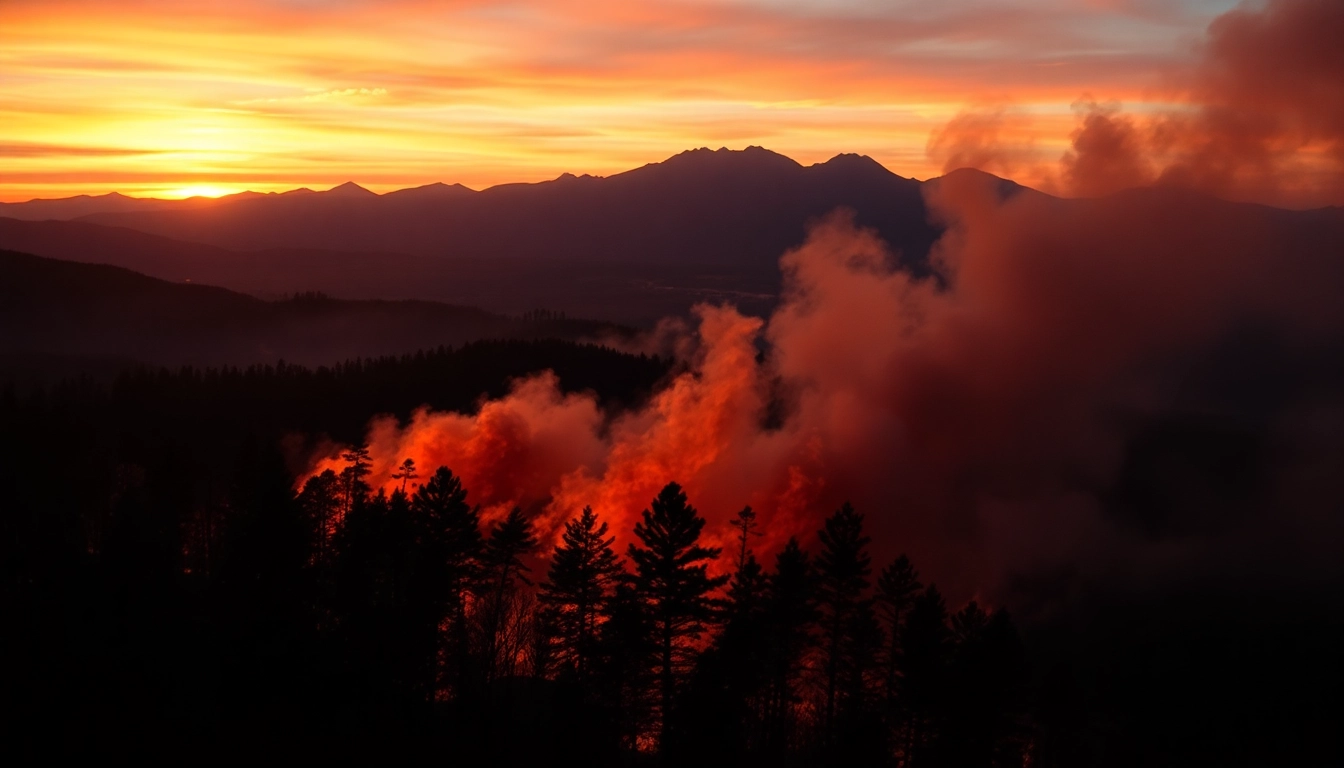
Introduction to Wildfire Events
Wildfire events are significant ecological occurrences that have profound effects on landscapes, biodiversity, and human health. Understanding the intricacies of these natural phenomena is essential, especially in an era where they are becoming increasingly frequent and severe. As climate patterns shift and human activities encroach on natural habitats, the prevalence of Wildfire events amplifies, warranting a comprehensive exploration into their causes, impacts, and future implications.
Definition and Causes of Wildfire Events
A wildfire, often referred to as a forest fire, is an uncontrolled fire occurring in vegetation that is typically located on undeveloped land. These infernos can ignite due to various factors, which can be classified into natural causes and human activities. Natural causes include lightning strikes, which can ignite dry vegetation, while human activities encompass campfires left unattended, discarded cigarettes, and even arson.
Seasonal variations also play a critical role in wildfire occurrence. During dry seasons, increased temperatures and reduced humidity create optimal conditions for fires to thrive. Additionally, certain ecosystems are more prone to wildfires due to their natural characteristics. For example, chaparral and grassland ecosystems, which are prevalent in the western United States, are particularly susceptible due to their dry climate and vegetation composition.
Historical Perspective on Wildfire Events
Historically, wildfires have shaped landscapes and ecosystems around the globe. Notably, the Great Fire of 1910 in the United States, which consumed over three million acres in Idaho and Montana, exemplifies the destructive potential of wildfires. Over the years, various regions have experienced severe wildfires due to environmental conditions, largely arising from both natural ignitions and human interference.
Examining historical wildfire events also reveals shifts in fire management policies. In the early 20th century, suppression efforts predominantly aimed to extinguish fires as quickly as possible. However, contemporary approaches acknowledge that fire can play a beneficial role in certain ecosystems, promoting growth and regeneration.
The Role of Climate Change in Wildfire Events
Climate change has emerged as a significant driver of increasing wildfire events. Rising temperatures, prolonged droughts, and shifting precipitation patterns exacerbate the conditions under which wildfires can ignite and spread. Regions that are already vulnerable to wildfires, such as California and Australia, are experiencing longer fire seasons with more intense fires.
Moreover, climate change contributes to an increased fuel load in forests. As vegetation becomes drier and more abundant due to prolonged heat and lack of moisture, the likelihood of ignition rises, leading to catastrophic fires that can be challenging to control.
Impact of Wildfire Events on Ecosystems
Effects on Flora and Fauna
Wildfire events wield significant effects on flora and fauna. While some species have adapted to thrive in post-fire landscapes, others experience detrimental impacts. For instance, fire-adapted species, like certain types of pine trees, rely on fire to promote germination and growth. In contrast, wildlife such as deer or birds may struggle to find shelter and food in the aftermath of a fire.
Notably, the recovery trajectory of plant and animal communities post-fire can vary considerably based on the severity of the fire and the ecological context. In some cases, invasive species may take hold, potentially outcompeting native vegetation and altering the ecosystem dynamics.
Soil Erosion and Recovery Post-Fire
The aftermath of wildfire events brings about increased soil erosion, particularly on steep slopes where vegetation cover has been lost. Without the anchoring roots of plants, the risk of mudslides and surface runoff increases significantly, which can further degrade water quality in nearby streams and rivers. However, in the long term, soil can recover, aided by natural processes and seed dispersal from surviving plants.
Long-term Changes in Biodiversity
Wildfire events can lead to long-term changes in biodiversity within affected areas. In the short term, the loss of species may lead to reduced biodiversity but can also pave the way for ecological succession, whereby new plant species colonize and transform the landscape. Over time, resilience mechanisms develop, and ecosystems can regenerate, sometimes even exceeding previous biodiversity levels.
Moreover, fire-adapted ecosystems may demonstrate increased biodiversity as different species become more prevalent in fire-prone environments. This phenomenon underscores the complex relationship between wildfires and ecological systems.
Human Influence and Wildfire Events
Urban Development and Fire Risk
Urban development often increases vulnerability to wildfire events. As communities expand into traditionally wild areas, the risk of fire igniting increases due to human activities. Properties constructed too close to flammable vegetation can become easily ignited by stray embers, leading to devastating losses. The phenomenon often called the "wildland-urban interface" highlights the critical interplay between human development and wildfire risk.
Prevention Strategies for Wildfire Events
Effective wildfire prevention strategies are critical in mitigating risks and protecting communities. Initiatives such as controlled burns, which involve intentionally setting fires under controlled conditions, have shown promise in reducing fuel loads and managing vegetation. Furthermore, community preparedness programs educating residents on evacuation routes and fire-resistant landscaping can significantly enhance resilience.
Proactive land management practices, including creating defensible spaces around properties and conducting regular vegetation management, help reduce potential fire hazards.
Emergency Response and Management
Emergency response to wildfire events relies on coordinated efforts between various agencies, including fire departments, local governments, and non-profit organizations. Establishing effective communication strategies is vital for disseminating information to the public and ensuring that residents receive timely warnings.
Implementation of modern technology, such as satellite monitoring and predictive modeling, enhances the ability to forecast fire behavior, ultimately improving response efforts. Furthermore, establishing clear evacuation routes and safe zones can save lives and reduce property damage during major incidents.
Health Effects Related to Wildfire Events
Air Quality and Public Health Risks
Wildfires have significant implications for air quality, as the smoke produced contains harmful particulate matter and toxins that pose health risks to communities. Exposure to wildfire smoke can cause respiratory issues, cardiovascular problems, and exacerbation of pre-existing health conditions such as asthma.
Vulnerable populations, including children, the elderly, and those with pre-existing health conditions, are particularly at risk. Public health campaigns aiming to educate communities on how to protect themselves during wildfire events have become increasingly necessary.
Mental Health Implications of Wildfire Events
The mental health impacts of wildfire events are profound and often overlooked. Individuals who experience evacuation, loss of property, or trauma due to wildfires may face significant mental health challenges, including anxiety, depression, and post-traumatic stress disorder (PTSD).
Community support systems and mental health resources become crucial, as recovery from such distressing events often necessitates comprehensive psychological support.
Community Preparedness for Health Risks
Community preparedness initiatives focus on safeguarding public health during wildfire events. Educating residents about fire risks, smoke inhalation effects, and safe practices can empower communities to take proactive measures.
Preparing emergency response plans that include health resources, such as access to clean air shelters and medical assistance, is essential in mitigating the health impacts associated with wildfire events.
Future Outlook for Wildfire Events
Predicted Trends in Wildfire Events
The future of wildfire events appears increasingly troubling as climate patterns shift. Scientific predictions suggest that as temperatures rise and dry conditions become more prevalent, the frequency and intensity of wildfire events will likely increase, particularly in regions that are currently fire-prone.
Understanding these trends is essential for developing adaptive strategies and resilience-building programs aimed at mitigating risks associated with wildfire events.
Innovative Technologies in Fire Prevention
Emerging technologies hold great potential for improving wildfire prevention and management efforts. Innovations such as drones equipped with thermal imaging can assist in detecting hot spots and assessing fire behavior, while machine learning models improve forecasting accuracy.
Moreover, advancements in geographic information systems (GIS) enable more efficient mapping of fire risks, helping local governments develop targeted strategies to protect communities.
Enhancing Resilience in Affected Areas
Enhancing resilience in areas affected by wildfire events involves a multi-faceted approach that integrates environmental, social, and economic strategies. Rebuilding communities and landscapes in a sustainable manner is paramount, focusing on fire-resistant materials and revitalization efforts that integrate native species to promote ecological balance.
Engaging local communities in preparedness initiatives fosters a culture of resilience, ensuring that residents are equipped with the knowledge and skills to face future wildfire challenges effectively.
FAQs
What causes wildfires?
Wildfires can be caused by natural events, such as lightning, or human activities like unattended campfires, discarded cigarettes, or arson.
How do wildfires affect the environment?
Wildfires can devastate flora and fauna, lead to soil erosion, and alter biodiversity, but they can also promote ecological regeneration in fire-adapted ecosystems.
What are some wildfire prevention strategies?
Effective strategies include controlled burns, creating defensible spaces, public education on fire risks, and proactive vegetation management practices.
How do wildfires impact public health?
Wildfires contribute to air pollution, resulting in respiratory and cardiovascular issues, especially among vulnerable populations. Mental health impacts are also significant.
What is the future of wildfires in a changing climate?
As climate change progresses, wildfires are predicted to become more frequent and intense due to rising temperatures, prolonged drought, and increased vegetation dryness.