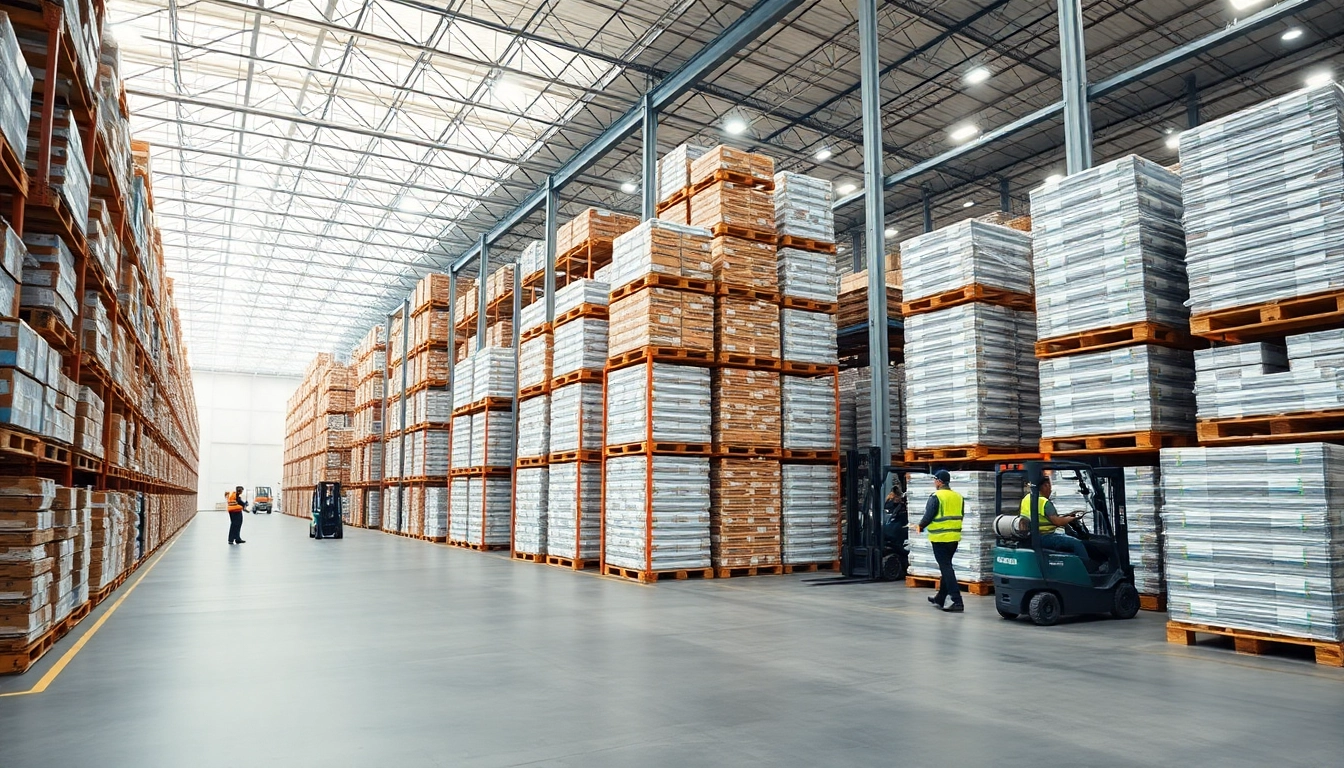
Understanding the Landscape of Warehousing
In today’s fast-paced commercial environment, effective warehousing has become a cornerstone of efficient supply chain management. With businesses increasingly relying on warehousing to store their goods, it is vital to grasp what warehousing encompasses, its historical evolution, the current trends shaping the industry, and its core operations. This comprehensive exploration will provide a solid understanding of warehousing, ranging from its definition to the future innovations that promise to reshape the industry.
Definition and Purpose of Warehousing
Warehousing can be fundamentally defined as the process of storing goods until they are ready for distribution or sale. It serves multiple purposes in the supply chain, including the consolidation of goods, inventory management, and the facilitation of order fulfillment. By acting as a bridge between manufacturers, retailers, and customers, warehousing plays an essential role in ensuring that products are available when and where they are needed.
Historical Overview of Warehousing
The concept of warehousing dates back centuries, evolving from simple storage facilities to complex logistics centers. Initially, warehouses were basic structures used primarily for temporary storage of goods. As trade routes expanded and commerce flourished, warehouses began to adopt more sophisticated features. The Industrial Revolution marked a turning point, introducing mechanization and systematic storage practices. This evolved into the modern warehousing sector characterized by high-tech facilities equipped with inventory management systems and automation technologies.
Current Trends in Warehousing Industry
Today, the warehousing industry is at the forefront of adopting new technologies and methodologies. Key trends include:
- Automation and Robotics: The integration of robotics for picking, packing, and transportation tasks enhances efficiency and accuracy.
- E-commerce Impact: The surge in online shopping has driven demand for strategically located warehousing closer to urban centers for faster delivery.
- Sustainability Efforts: Increased focus on eco-friendly practices, such as energy-efficient operations and waste reduction initiatives.
- Data Analytics: Utilizing big data for inventory management and demand forecasting, making warehousing operations more agile.
Core Functions of Warehousing
Storage Solutions for Efficient Inventory Management
Effective inventory management hinges on the ability to store goods in a manner that optimizes retrieval and tracking. The use of standardized storage systems, such as pallet racking, enables warehouses to maximize space utilization. Additionally, implementing a warehouse management system (WMS) facilitates the real-time tracking of inventory levels, reducing the likelihood of stockouts or excess inventory.
Moreover, categorizing items based on their demand frequency—using techniques such as ABC analysis—improves the organization and accessibility of products. This meticulous inventory categorization allows warehouses to streamline operations and enhance overall efficiency.
Order Fulfillment and Distribution Processes
Order fulfillment is a critical function within warehousing that translates incoming orders into processed shipments. The process typically involves receiving orders, picking items from storage, packing them, and then dispatching them for delivery. Efficiency in order fulfillment can greatly impact customer satisfaction and retention.
Modern warehouses often employ various fulfillment strategies—like batch picking or wave picking—to optimize the order processing time. Additionally, the use of automated systems for packing and shipping minimizes human error and improves speed, which is paramount in today’s competitive market.
Role of Technology in Enhancing Warehousing Efficiency
Technological advancements have transformed warehousing practices dramatically. The introduction of automatic identification technologies like barcoding and RFID (Radio-Frequency Identification) has enabled enhanced tracking and inventory accuracy. These technologies minimize data entry mistakes and provide real-time visibility into inventory levels.
Furthermore, automated guided vehicles (AGVs) and drones are emerging as significant innovations, aiding in the transport of goods within the warehouse. Implementing such technologies not only boosts operational efficiency but also reduces labor costs and enhances safety by minimizing manual handling.
Benefits of Effective Warehousing
Cost Reduction Strategies in Warehousing
Effective warehousing can lead to significant cost reductions in several ways. By optimizing storage space, companies can reduce overhead costs associated with underutilized real estate. Additionally, improved inventory management minimizes holding costs and reduces the capital tied up in unsold goods.
Other strategies include consolidating shipments to reduce transportation expenses and implementing lean warehousing practices that eliminate waste from processes. Ultimately, the focus should be on enhancing efficiency and reducing unnecessary expenditures throughout the warehousing cycle.
Supply Chain Optimization through Warehousing
Warehousing acts as a strategic point for supply chain optimization. By serving as a buffer between production and consumption, warehouses enable businesses to coordinate supply and demand more effectively. Properly managed warehousing can significantly enhance the overall responsiveness of a supply chain.
For instance, utilizing distribution centers allows businesses to ship goods more efficiently to their customer base, dramatically improving lead times. This responsive approach not only meets customer expectations but also gives companies a competitive edge within their industry.
Improving Customer Satisfaction with Streamlined Processes
Customer satisfaction directly correlates with effective warehousing practices. Streamlined operations that ensure timely delivery and accurate order fulfillment result in increased loyalty and positive customer experiences. By employing advanced inventory management systems and optimizing logistics, companies can react swiftly to market demands and accommodate customer needs.
Moreover, consistent communication and transparent order tracking foster trust and reliability among customers, enhancing long-term relationships. In essence, efficient warehousing not only boosts satisfaction but also enhances the brand reputation in the marketplace.
Types of Warehousing
Public, Private, and Hybrid Warehousing Options
Warehousing solutions vary significantly based on the type of business needs. Public warehousing offers flexible storage options without long-term commitments, making it ideal for seasonal businesses. Companies can use these facilities to manage fluctuations in inventory without incurring high fixed costs.
In contrast, private warehousing provides dedicated storage space for companies with consistent inventory levels. This approach enables greater control over operations and customization of processes to suit specific business requirements.
Hybrid warehousing merges both public and private options, allowing businesses to maintain flexibility in a dynamic market environment. This adaptability is essential in a landscape where demand can shift unexpectedly.
Temperature-Controlled Warehousing for Perishable Goods
Temperature-controlled warehousing is critical for industries dealing with perishable items, such as food and pharmaceuticals. These specialized warehouses require strict climate control to preserve product integrity and compliance with safety regulations. Implementing advanced refrigeration technologies can ensure that conditions remain optimal for storage and prevent spoilage.
Temperature monitoring systems are also vital. By leveraging IoT (Internet of Things) devices connected to real-time data analytics platforms, warehouses can receive instant alerts about temperature deviations, ensuring prompt corrective actions. This vigilance in temperature management not only protects inventory but also upholds brand reputation.
Automated Warehousing and Its Impact on Operations
The rise of automated warehousing is reshaping the way goods are stored and distributed. Automated systems can include conveyor belts, robotic pickers, and automated storage and retrieval systems (AS/RS). These technologies enhance efficiency and accuracy while significantly reducing the need for manual labor.
Additionally, automation allows for scalable solutions. Warehouses can adjust their operations based on demand levels, maintaining peak performance during busy seasons while optimizing costs during slower periods. The result is a dynamic warehouse environment that adapts seamlessly to changing needs.
Future of Warehousing: Challenges and Innovations
Adapting to E-commerce Growth in Warehousing
The explosion of e-commerce has created both opportunities and challenges for the warehousing sector. With growing expectations for same-day and next-day delivery, warehouses must evolve to meet these demands while maintaining high levels of operational efficiency.
Meeting these new standards involves rethinking warehousing strategies, such as establishing urban distribution centers that are closer to end customers. This geographical shift allows for quicker fulfillment times and caters to the rising consumer expectation for speed and convenience.
Sustainability Practices in Warehousing Operations
As sustainability becomes a key focus across industries, warehousing must adapt by embracing eco-friendly practices. Implementing energy-efficient lighting, utilizing renewable energy sources, and optimizing transportation processes to reduce carbon footprints are all avenues of improvement.
Beyond operational adjustments, organizations can also engage in sustainable sourcing practices, choosing materials and suppliers that prioritize environmental responsibility. Emphasizing sustainability not only reduces costs in the long run but also resonates with increasingly eco-conscious consumers.
Emerging Technologies Shaping the Future of Warehousing
Innovation is set to define the future of warehousing, with several emerging technologies poised to reshape operations. Technologies such as artificial intelligence (AI) and machine learning will enable smarter inventory management and dynamic forecasting capabilities. These advancements can lead to better decision-making and predictive analytics, ultimately improving responsiveness and efficiency.
Blockchain technology is another transformative force, offering enhanced transparency and security in supply chain transactions. By providing a decentralized ledger, blockchain can streamline processes as goods move through various stages, ensuring accuracy and traceability.
Finally, the rise of augmented reality (AR) applications can enhance the picking and packing processes, allowing operators to visualize orders and inventory locations, further improving accuracy and efficiency.
In conclusion, warehousing serves as an indispensable component of supply chain management. Understanding its foundational elements, core functions, and emerging trends equips businesses to maximize this critical resource. As technology and market conditions continue to evolve, staying adaptable and embracing innovation will be paramount for leaders in the warehousing landscape.