
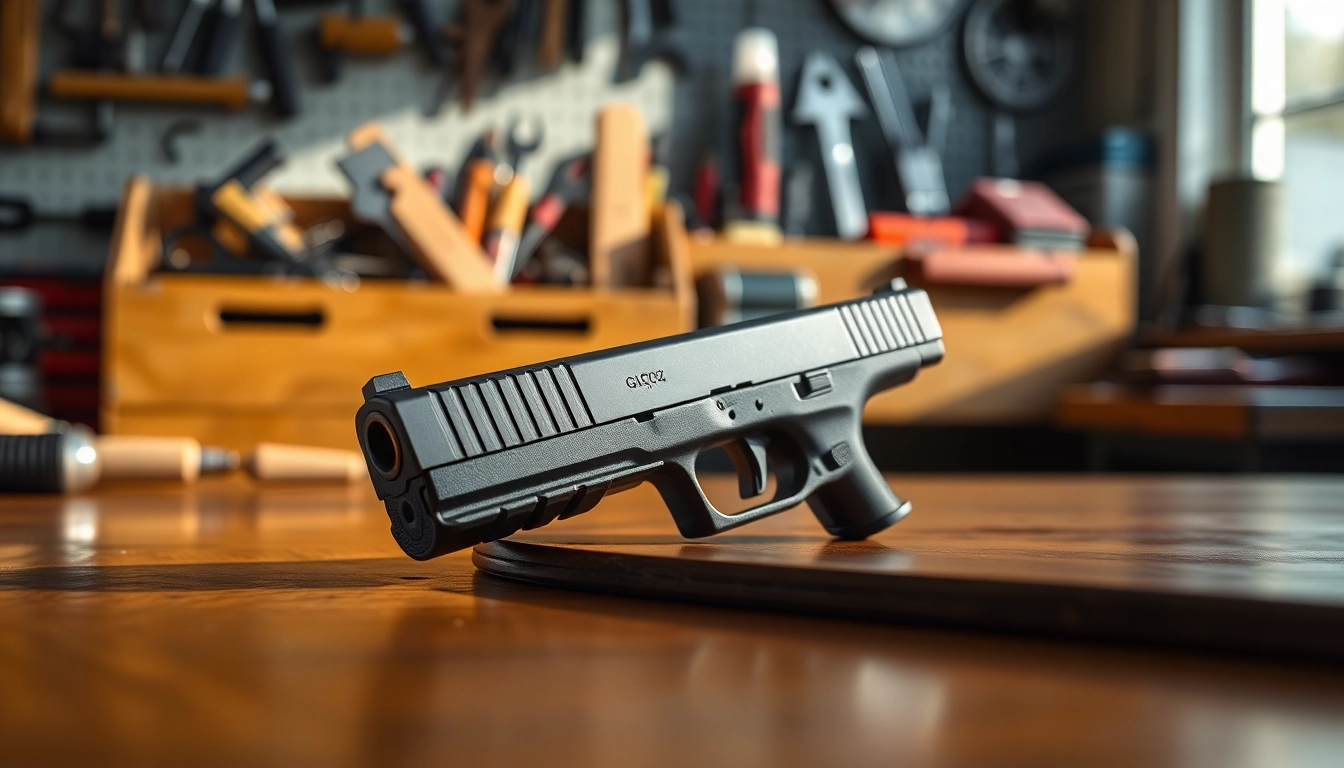
Understanding Glock Slide Essentials
What is a Glock Slide?
The glock slide is a vital component of the Glock pistol, which houses several key mechanisms that contribute to its reliable functioning. It serves multiple purposes, including protecting the internal components of the handgun and providing a mount for the sights. When the gun is fired, the slide moves back to eject the spent casing, and then it moves forward to chamber a new round. Understanding the mechanics behind the Glock slide is essential for both enthusiasts and operators to maximize performance and reliability.
Key Components of a Glock Slide
A Glock slide consists of several important elements, each playing a critical role in the overall functionality of the firearm. These components include:
- Slide Cover Plate: This covers the rear of the slide and keeps dirt and debris out of the internal mechanisms.
- Firing Pin: Crucial for striking the primer of the cartridge, leading to ignition.
- Extractor: Responsible for removing the spent casing from the chamber after firing.
- Recoil Spring Assembly: Absorbs recoil and aids in returning the slide back to its original position after firing.
- Sights: Typically include front and rear sights that help with aiming the firearm.
Benefits of Upgrading Your Glock Slide
Upgrading your Glock slide can enhance performance in multiple ways. For instance, aftermarket slides can be designed for better accuracy, lower weight, or improved recoil management. They can also feature additional cuts for mounting optics, providing flexibility for customization and enhancing usability. Furthermore, upgraded materials can increase durability, offering potential advantages for competition shooters or individuals engaged in extensive training. Overall, an upgraded slide not only enhances the functionality of your handgun but can also improve the aesthetic appeal, making your firearm truly unique.
Types of Glock Slides Available
Factory vs. Aftermarket Glock Slides
When selecting a Glock slide, it’s essential to understand the differences between factory and aftermarket options. Factory slides are designed to meet the specifications set by the manufacturer and typically ensure compatibility and reliability. They are suitable for those who prioritize warranty and high-quality manufacturing standards.
On the other hand, aftermarket slides generally offer a broader range of customization options. They may incorporate advanced features, such as lighter materials or innovative designs, enabling users to enhance certain aspects of performance. However, before investing in an aftermarket slide, users should ensure it complies with legal regulations and verify quality through reputable brands.
Custom Glock Slide Options
Custom Glock slides can be tailored to meet specific needs and preferences. These slides can feature various modifications, such as different thicknesses, cuts for optics, or custom finishes. Optics-ready slides allow the installation of red dot sights, which can dramatically improve aiming speed and precision.
Additionally, custom engravings and coatings can give a personal touch, making the slide not just functional, but also a reflection of the owner’s personality. Whether it’s for competitive shooting, personal defense, or aesthetic preferences, custom options provide a tailored solution for every Glock enthusiast.
Choosing the Right Glock Slide for Your Needs
Selecting the ideal Glock slide involves several considerations. First, assess your primary use case: whether for personal defense, competition, or casual plinking. This will heavily influence the features you prioritize, such as weight reduction or compatibility with optics.
Next, consider your budget. Aftermarket and custom options can vary widely in price. Don’t forget to read reviews and forums, as insights from other users can be invaluable in understanding the performance and reliability of various slides. Lastly, ensure that any selected option adheres to legal regulations in your jurisdiction concerning firearm modifications.
Installation and Maintenance Tips
Step-by-Step Installation Guide
Installing a Glock slide can be accomplished with minimal tools and a basic understanding of the firearm’s mechanics. Here’s a step-by-step guide:
- Ensure the firearm is unloaded and take necessary safety precautions.
- Remove the slide by pressing the slide release while pulling the trigger; this will allow the slide to be detached from the frame.
- Detach the recoil spring assembly and barrel from the original slide.
- Insert the barrel and recoil spring assembly into the new slide, ensuring they are positioned correctly.
- Align the slide with the Glock frame and push forward until it clicks into place, ensuring the slide release engages properly.
Once installed, it’s essential to test fire the handgun to verify proper operation and function.
How to Properly Maintain Your Glock Slide
Regular maintenance of your Glock slide is crucial for optimal performance. Here are some tips:
- Cleaning: Clean your slide after each use. Use a solvent or cleaning solution to remove the carbon buildup. Regular cleaning prevents jams and malfunctions.
- Lubrication: Apply a small amount of lubricant to the slide rails and internal components to ensure smooth functionality.
- Inspections: Regularly inspect the slide for any signs of wear, cracks, or damage. Replace components as necessary.
Common Issues and Solutions
Encountering issues with your Glock slide isn’t uncommon, but many problems have straightforward solutions. For example:
- Stove-piping: If cases are getting stuck in the ejection port, ensure the extractor is clean. Consider adjusting the tension if it’s an aftermarket part.
- Failure to Feed: A dirty chamber can contribute to feeding issues. Regular cleaning and lubrication can greatly reduce this problem.
- Pin and Spring Issues: If your slide feels loose, inspect the pins and recoil spring for wear and replace them if necessary.
Performance Impact of Upgrading Your Glock Slide
Accuracy Improvements
One of the most significant advantages of upgrading your Glock slide is improved accuracy. Aftermarket slides are often machined with greater precision than factory options. These enhancements can lead to a more stable shooting platform, allowing for tighter groupings downrange. Additionally, features like slide cuts can reduce weight, which may further enhance accuracy by minimizing muzzle rise during firing.
Impact on Recoil Management
A well-designed Glock slide can substantially improve recoil management. Features such as venting or porting can mitigate the snap of recoil, allowing shooters to stay on target more effectively. This is particularly crucial in competitive shooting and rapid-fire situations, where managing recoil can lead to a significant advantage in performance.
Enhancing Aesthetics and Customization
Beyond performance, Glock slide upgrades often focus on aesthetics, giving users the opportunity to personalize their firearms. Options like unique finishes, engravings, or cuts not only enhance the visual appeal but can also serve functional purposes, such as allowing easier manipulation or mounting of accessories. Customization fosters a connection between the shooter and their firearm, often enhancing the shooting experience overall.
Frequently Asked Questions about Glock Slides
How do I choose the right Glock slide?
Consider the intended use, whether for defense or competition. Evaluate features like weight, compatibility with optics, and material quality before making a choice.
Can I install a Glock slide myself?
Yes, many gun owners successfully install Glock slides themselves. Ensure to follow proper safety precautions and guides for a successful installation.
What materials are Glock slides made of?
Most Glock slides are made from high-strength steel or alloys. Some aftermarket options may use lightweight materials to enhance performance.
Is a custom Glock slide worth it?
A custom Glock slide can enhance performance, aesthetics, and personalization. If these factors matter to you, the investment may be worthwhile.
How often should I maintain my Glock slide?
Maintenance frequency depends on usage. Generally, clean the slide after each shooting session and conduct regular inspections to ensure optimal performance.